
Your refrigerator runs every hour of every day, which makes it easy to take for granted — right up until it isn't cold anymore. In Fresno and Clovis, where summer heat and dusty air put extra strain on cooling systems, a little routine maintenance goes a long way toward avoiding that moment entirely.
Clean your refrigerator's condenser coils every 6 months, check the door seal quarterly, and keep it between 35–38°F. In Fresno's dust and heat, that simple routine can add years to a fridge's life and meaningfully lower your energy bill.
Why It's Worth the Effort
A neglected fridge works harder than it needs to, and that shows up on your energy bill long before it shows up as a breakdown. Dust-caked coils, a worn door seal, or a warm interior all force the compressor to run longer and harder, wearing it out faster than it should. In neighborhoods like Woodward Park, Fig Garden, and Sunnyside, where triple-digit summer days are routine, that extra strain adds up fast — refrigerators here are working against ambient kitchen temperatures that regularly climb into the 80s, even with air conditioning running.
Beyond the energy cost, a fridge that's not holding temperature properly puts your food at real risk. According to USDA guidance on refrigeration safety, the safe zone for refrigeration is below 40°F — anything warmer for an extended period gives bacteria room to grow, turning a mechanical problem into a food safety one.
There's also a compounding effect that's easy to underestimate: a refrigerator running inefficiently doesn't just cost more to operate, it wears out its own components faster, which means the small problem you're ignoring today is quietly setting up next year's much bigger repair bill.
What to Check, and How Often
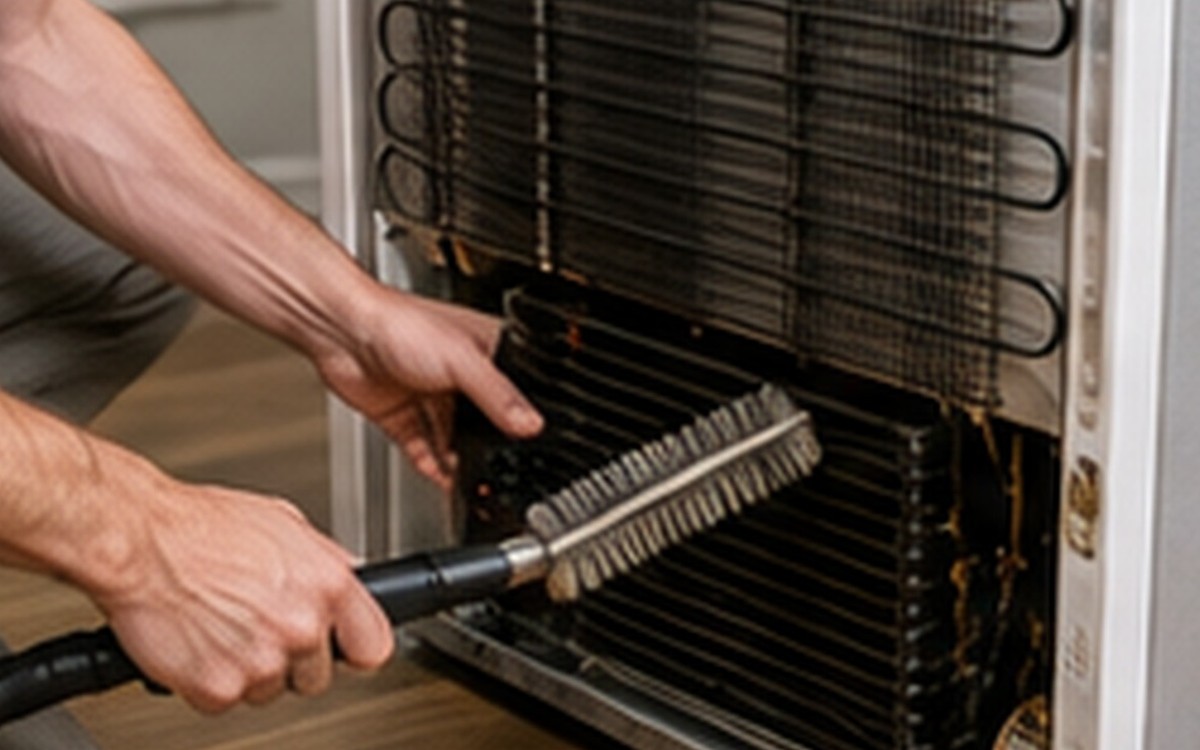
Condenser coils. Twice a year, unplug the fridge and vacuum the coils (usually behind or underneath the unit), then finish with a coil brush to get between the fins. Dust buildup is one of the most common reasons a fridge runs constantly without actually cooling well — and it's a five-minute fix most homeowners can do themselves.
If your fridge sits in a garage, check the coils every 3 months instead of twice a year. Garage units pull in far more dust and pollen than kitchen units, especially near Fresno's agricultural areas.
Door seals. Check the rubber gasket for cracks or gaps every few months. A simple test: close the door on a dollar bill. If it slides out easily, the seal needs replacing. In our dry climate, rubber seals can crack and lose elasticity faster than they would in more humid regions, and a compromised seal is one of the sneakier causes of a fridge that "just seems to run a lot."
Temperature. Keep the fridge between 35–38°F and the freezer at 0°F, per FDA cold storage recommendations. A cheap appliance thermometer is the only reliable way to know for sure — the dial on the unit itself is often a rough guess, sometimes off by five degrees or more, particularly on units older than 8–10 years.
Interior cleaning. Wipe down shelves and drawers regularly, and don't let spills sit. Beyond hygiene, a clean interior helps airflow move the way it's designed to, which matters more than most people realize for even cooling throughout the unit.
Water and ice line. If your fridge has a water dispenser or ice maker, replace the filter roughly every six months. Fresno's water hardness can clog these faster than in areas with softer water, leading to reduced flow, off-tasting ice, and in some cases, strain on the water valve itself.
If you notice white mineral buildup around your ice maker or dispenser, that's Fresno's hard water at work. A basic inline water filter, installed by a technician, can meaningfully extend the life of the valve and dispenser components.
Leveling. An unlevel refrigerator can cause the door to not seal properly on one side, or make ice makers and water dispensers work incorrectly. Check with a level every so often, especially after any flooring work or after a move.
Signs It's Time to Call a Professional
- The fridge runs constantly but food still isn't staying cold
- Water pooling underneath or inside the unit
- Unusual noises from the compressor — buzzing, grinding, or a loud clunk on startup
- Temperature swings that don't respond to adjusting the dial
- Frost building up rapidly inside the freezer compartment (see our guide on why freezers frost over)
- The compressor area feels excessively hot to the touch
- A burning smell, which should always be treated as urgent
DIY Maintenance vs. Professional Service
Most of the maintenance tasks above are well within reach for a homeowner comfortable with basic tools — cleaning coils, checking seals, and keeping the interior clean don't require any special training. Where it makes sense to bring in a professional is anything involving the sealed refrigerant system, electrical diagnostics, or a compressor that isn't behaving normally. Attempting to open a sealed system without EPA Section 608 certification is both illegal and genuinely dangerous, so that line is a hard one rather than a judgment call.
A professional maintenance visit typically includes everything on the DIY list, plus electrical testing, a full inspection of the compressor and fan motor, and a check of refrigerant pressure — things that catch problems well before they become visible symptoms.
A Seasonal Refrigerator Checklist for the Central Valley
| Season | What to Do |
|---|---|
| Spring | Deep-clean coils before summer heat arrives |
| Summer | Check door seals monthly; verify temperature weekly |
| Fall | Replace water filter; inspect gasket for wear from summer heat |
| Winter | Full inspection if the unit is in an unheated garage |
The Cost of Neglect
It's worth being direct about the economics here. Maintenance and repair costs vary depending on the appliance, diagnosis, required parts and accessibility, and customers receive an estimate before work begins. As a general rule, routine upkeep like coil cleaning is far less expensive than the larger repairs or replacement that often follow years of neglect. Maintenance isn't just about extending the life of the appliance; it's meaningfully cheaper than the alternative, every time.
Why This Matters More in Fresno Than Elsewhere
Homes throughout Fresno, Clovis, and Madera deal with a specific combination of stressors that make refrigerator maintenance more important than it might be in a milder climate: extended stretches of extreme heat, dry air that accelerates rubber and gasket wear, dust from agricultural land and dry landscaping, and hard water that affects ice makers and water lines faster than in many other parts of the state. None of this means a refrigerator here is doomed to a short life — it just means the maintenance schedule matters more, not less.
A refrigerator that's properly maintained can easily run 10 to 15 years. One that's neglected often needs major repairs well before that. If something doesn't seem right, it's worth having a technician take a look before a small issue becomes a full replacement — especially with how quickly Fresno summers can turn a slow leak or a struggling compressor into a spoiled-food emergency.
MVI Appliance provides refrigerator repair and maintenance across Fresno, Clovis, and Madera, including same-day service when something's already gone wrong. MVI does not perform sealed-system or compressor repairs. See our refrigerator repair services for the full list of problems we handle, request a service call, or explore our full maintenance program to catch problems before they start.
Frequently Asked Questions
How often should I clean my refrigerator's condenser coils in Fresno?
Twice a year is the standard recommendation, but Fresno's dusty summers and hard water can accelerate buildup. Homes with pets, homes near agricultural areas, or units installed in a garage may need quarterly cleaning to keep the compressor from overworking.
What temperature should my refrigerator and freezer be set to?
Keep the refrigerator between 35–38°F and the freezer at 0°F. Use an appliance thermometer rather than trusting the built-in dial, which is often inaccurate by several degrees, especially on older units.
Why does my refrigerator run constantly without getting cold?
This is usually dirty condenser coils, a failing door seal, or a blocked vent restricting airflow. If cleaning the coils and checking the seal doesn't resolve it within a day, the compressor or a control component likely needs a professional diagnosis.
Is it normal for a refrigerator to make noise?
A soft hum or occasional click as the compressor cycles is normal. Buzzing, grinding, rattling, or a loud clunk when the compressor starts is not, and usually points to a compressor, fan, or mounting issue worth having checked before it leads to a full breakdown.
How long should a well-maintained refrigerator last?
10 to 15 years is typical with regular maintenance. Refrigerators that never get cleaned or serviced often need major repairs — or replacement — well before that, sometimes as early as year 6 or 7.
Does a garage refrigerator need different maintenance than one in the kitchen?
Yes. Garage units in Fresno and Clovis deal with far wider temperature swings, more dust, and less airflow than kitchen refrigerators. They benefit from more frequent coil cleaning and, ideally, a garage-rated model designed to handle extreme heat.
Can I maintain my refrigerator myself, or do I need a professional?
Coil cleaning, seal checks, and interior cleaning are all reasonable DIY tasks. Anything involving the sealed refrigerant system, electrical components, or a compressor that isn't cycling correctly should go to a licensed technician.
What's the real cost difference between maintaining a fridge and neglecting it?
Maintenance and repair costs vary depending on the appliance, diagnosis, required parts and accessibility. Customers receive an estimate before work begins. As a general rule, routine upkeep like coil cleaning is far less expensive than the larger repairs or replacement that often follow years of neglect.