
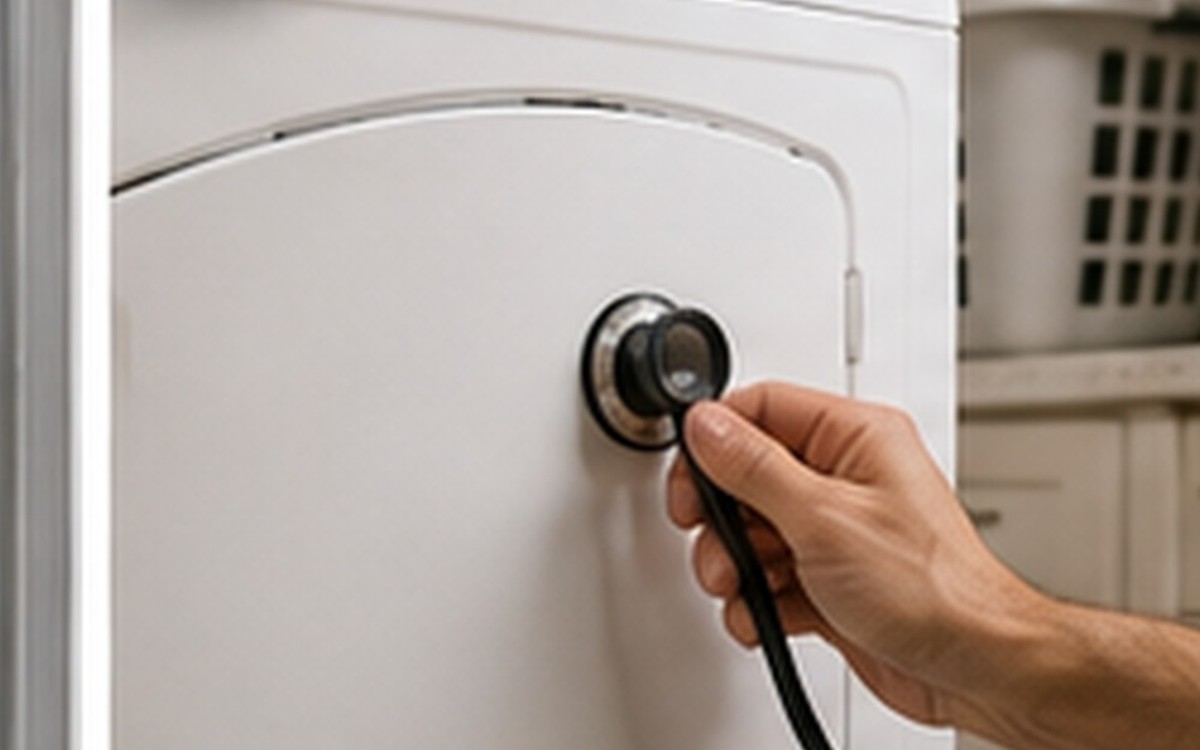
A dryer that suddenly starts thumping, squealing, or grinding is hard to ignore — and it's usually a sign that something specific has worn out, not a mystery you need to guess at.
Thumping usually means worn drum rollers, squealing points to a belt or bearing issue, and rattling often traces back to a clogged vent. Most causes are identifiable by sound alone before a technician even opens the panel.
The Usual Suspects
Worn drum rollers are one of the most common causes of loud thumping or squealing, since they deteriorate with regular use over time.
A faulty blower wheel can produce rattling or vibrating sounds as it struggles to circulate hot air properly.
A loose or worn drum bearing often causes squealing or grinding as the drum rotates.
A defective idler pulley, which maintains tension on the drive belt, can create squeaking or rumbling when it starts to fail.
A clogged or damaged vent restricts airflow, forcing the dryer to work harder and often producing rattling or banging as a result — and it's a fire risk worth taking seriously on its own.
Diagnosing by Sound: A Quick Reference
| Sound | Likely Cause |
|---|---|
| Thumping | Worn drum rollers |
| Squealing | Belt or bearing wear |
| Rattling | Blower wheel or clogged vent |
| Grinding | Drum bearing failure |
| Squeaking | Idler pulley |
Other Common Causes
Overloading the dryer strains the motor and components. A misaligned drum can cause rubbing or scraping. A loose or worn belt often produces squealing or thumping as it slips. And simple lack of lubrication on moving parts can create friction noise that's easy to fix once identified.
Run the dryer empty for a minute and listen closely. Isolating the sound without clothes tumbling makes it much easier to pinpoint whether the noise is coming from the drum, the motor area, or the vent — useful information to give a technician over the phone.
What You Can Check Yourself
- Clean the lint trap and vent line
- Check for loose change or small objects trapped inside
- Make sure the dryer is level and not overloaded
- Look for visible wear on the belt or rollers if you're comfortable opening the panel
Fresno's dry climate means lint accumulates and compacts faster in vent lines than in more humid regions. If it's been more than a year since your vent was professionally cleaned, that's a reasonable place to start even before assuming a mechanical failure.
Gas vs. Electric Dryers: Any Difference in Noise Causes?
The mechanical components responsible for most noise — drum, rollers, belt, bearings, blower — are essentially identical across gas and electric dryers. Gas models have an additional burner assembly that can occasionally introduce its own noise, typically a clicking or humming sound distinct from the mechanical noises covered above, worth mentioning specifically if you have a gas dryer and call for service.
When to Call a Professional
If the noise persists after basic troubleshooting, or if you suspect a motor, bearing, or belt issue, it's worth having a technician diagnose it properly. Continued use of a dryer with an unresolved mechanical problem can lead to more expensive damage — and in some cases, a real safety hazard.
Preventing Premature Wear
While drum rollers, belts, and bearings all wear out eventually as a normal part of a dryer's lifecycle, a few habits slow that process meaningfully. Avoid chronic overloading, which puts extra stress on every moving component with each cycle. Keep the dryer level, since an uneven unit places uneven stress on rollers and bearings. And address small noises early — a slightly worn roller replaced promptly is a simpler, less expensive repair than waiting until it fails completely and potentially damages the belt or drum in the process.
What Repair Typically Involves
Most dryer noise repairs — rollers, belts, idler pulleys — involve a technician removing the front or rear panel to access the drum assembly, testing the specific component suspected based on the noise pattern, and replacing it. These are generally well-understood, commonly performed repairs with parts readily available for most major brands, which keeps both the repair time and cost on the more reasonable end compared to less common appliance issues.
Addressing dryer noise early usually means a simpler, cheaper repair and a quieter laundry room much sooner. MVI Appliance serves Fresno and Clovis — schedule a diagnostic visit if your dryer's trying to tell you something.
Frequently Asked Questions
What's the most common cause of a thumping dryer?
Worn drum rollers are the most frequent culprit. They deteriorate with regular use and produce a rhythmic thumping or squealing sound as the drum rotates over them.
Is a squealing dryer dangerous?
Not immediately, but it usually signals a worn belt, bearing, or pulley that will eventually fail completely. It's worth addressing before it leaves you without a working dryer entirely.
Can a clogged vent really cause noise, not just slow drying?
Yes. A clogged vent restricts airflow, forcing the dryer's blower and motor to work harder, which often produces rattling or banging sounds in addition to the more commonly known symptom of longer drying times.
How much does it cost to fix a noisy dryer?
It depends on the cause — a drum roller or belt replacement is typically a moderate repair cost, while a motor replacement runs higher. A professional diagnostic visit will give you an exact figure before any work begins.
Should I keep using a noisy dryer while I wait for repair?
For mild noise, occasional use is usually fine short-term. But if the noise is accompanied by a burning smell, overheating, or the dryer stopping unexpectedly, stop using it and have it inspected promptly — these can be fire safety concerns.
Can I replace drum rollers myself?
It's a moderately involved repair that requires disassembling part of the dryer cabinet. Homeowners comfortable with appliance repair sometimes attempt it, but it's a common enough professional repair that many choose to have it done correctly the first time.
Does a gas dryer make different noises than an electric one?
The mechanical components — drum, rollers, belt, bearings — are largely the same across both types, so noise causes are similar. Gas dryers can additionally develop noise related to the burner assembly, which is a gas-specific component worth mentioning when describing symptoms to a technician.
How much does it typically cost to replace dryer drum rollers?
Drum roller replacement is generally on the more affordable end of dryer repairs, since it's a well-understood, commonly needed fix with widely available parts across most major brands.
Can I prevent drum roller wear from happening in the first place?
Avoiding chronic overloading and keeping the dryer reasonably level both reduce the stress placed on rollers over time, though some wear is a normal, expected part of a dryer's lifecycle regardless of care.